Tell us a bit about yourself and your current role:
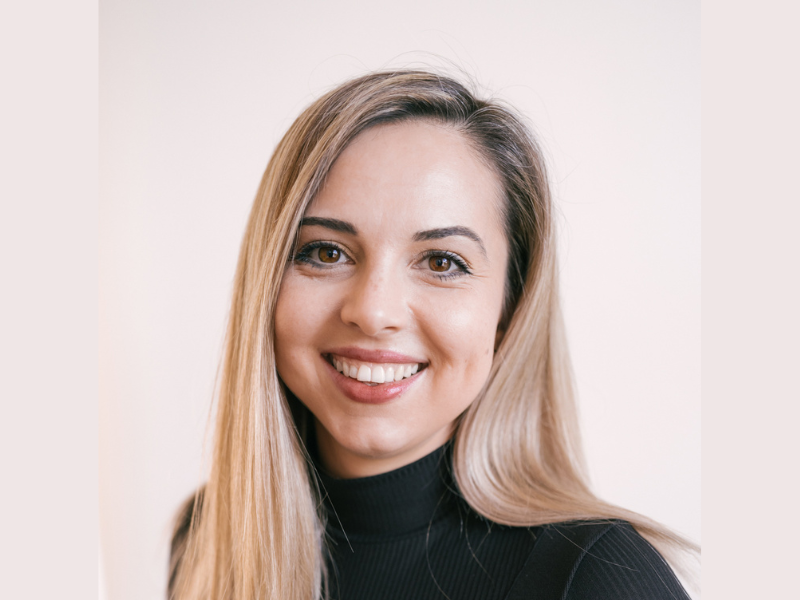
I’m currently the CCO & Co-Founder of Rayn – a synthetic data startup, revolutionising the ad tech world.
I’m a first-time founder, but I’ve had a number of Business Development Leadership positions. Today, I’m taking care of our commercial efforts, so anything from marketing and comms to sales and Business development. And entrepreneurship on its own is an entire journey.
My experience in the corporate world just reminded me how much I love start-up life – I love the fact that you can do anything – as a company and with your role and that your team, goals, and values are extremely aligned. That your culture is vibrant and everyone cares.
I get my energy from finding solutions to existing challenges, regardless if that is with my customers, my peers, my team, colleagues, or friends. I believe everyone can make an impact and I’d like to make as much positive impact as possible.
Additionally, I’m a single parent, an advocate for equality and diversity, and someone who is driven by values and beliefs.
How did you get into technology as a career
I never set out to have a career in tech. In fact, I did not even know about the existence of the specific industry I’m working in – ad tech and mar tech. I wanted to be an animation designer at Disney, I really did. I followed a commercial study, simply because I was coming from a family of exact sciences, as well as similar education. I knew I wanted something different, more creative. Throughout my studies I thought I wanted to do risk management and planning, but now I realise that’s the job of every leader.
I dipped my toes into the trade marketing world, and that was great, however, I knew I needed something more exciting, and more innovative. I wanted an “online marketing” job – that’s as far as I went. And then I got my first job in the ad tech world – which was a whole new learning curve. I had access to great leaders and interesting opportunities every day. I fell in love with the field. I loved the fact, that you can be an expert only after a few years in it, regardless of your age. And I found my passion in figuring out how to make new concepts become a reality. The field also taught me a few things about myself – I was led by empathy, but I was able to change the minds of very senior people (who at the time were all men).
Have you faced any career challenges along the way and how did you overcome these?
I would be surprised if anyone says – it was all smooth sailing. Challenges are a part of it. They make you stronger and you learn from them. Nobody learns from “smooth sailing”. But that is why I also view them as opportunities.
So one of my challenges/opportunities – I don’t ever remember taking a role that existed before. What that means – is there is no handover, I did not know how the role should be done, or what success looked like. So it was difficult because there was no benchmark. But also – there was no benchmark! There was just a pain – and people believed I’d be able to make it better. What came out of this – I overcame a large part of my insecurities that were instilled by my culture. In Bulgaria, you need to know you are good at something before you attempt to do it. Here, I just had to make it happen.
Another challenge – people used to underestimate me when they first saw me. I have the typical “Eastern European” look and there are certain associations that come with that. It sometimes made it more difficult to get a seat at the table, but once I did – I looked at it as a game. There is nothing to lose and I loved that moment when you saw the other seats at the table realise what I bring to it. I loved nothing else more than to be underestimated.
What are you most proud of in your career to date?
Proud? I can talk about numbers and achievements here, but in reality, I’m most proud of seeing people that I’ve helped professionally (in any way) in the past succeed. I love that. I’m also proud that I’ve been able to build amazing partnerships throughout my career (including my current team of Co-founders). In the end – people’s impact is what makes me proud.
And I do love it when my story inspires women in the industry (or in general). Being an Eastern European living in Western Europe, a single parent, and a woman in tech who is still challenging herself, growing, moving, and taking risks sometimes encourages other women to believe in themselves and not stand in their own way.
What one thing do you believe has been a major factor in your achieving success?
Trusting forward. I believe (in) people, concepts, ideas, possibilities first. That helped me in many ways – I could trust that any feedback comes from the best possible place and is never personal. Always a chance to improve. That also helped me create the great work relationships I have in my life today.
I trusted my leaders to make the best possible decisions and trusted my team to make things happen.
I trust that a new challenge brings new opportunities. I trust that new technological innovation can succeed. I first believe something is possible and then try to figure out if that is the case.
What barriers for women working in tech are still to be overcome?
Once you are in tech, I think the opportunities are there. However, I don’t know if enough women end up in tech to begin with. And if they do, they don’t end up in all sectors of tech. Even me – I’m on the commercial side and that is where I feel most women have been.
For some reason, I do believe ad tech and mar tech are more friendly to women than other industries (like banking). I do believe there is less open discrimination. It might be my own lack of sensitivity about things I’ve dealt with, or maybe the industry is generally “younger”, or maybe it’s just my luck.
I do believe that it’s just more difficult for women to keep up once they have children. I’ve seen it too many times. The sentence: “We need someone to give it their all now, and she’s probably going to want a baby soon”… I cannot endure that way of thinking. And honestly, that way of thinking comes because the tech industry has very strict short-term goals and targets. Everything moves quickly so you are usually thinking about the here and now, not necessarily about the long-term future.
What advice would you give to women who want a career in technology?
I would say – you have to love it. And by it – I mean change. The tech world is ever changing and if you are someone who is afraid of change, this world would be challenging. For me, it worked anyway – I loved the stability and knowing what tomorrow brings, but I was also looking for excitement and challenges, and tech gave me that. Nowadays change is just normal and I actually start to get a bit itchy if I feel like things are standing still for a while.
As a woman in tech, I would advise you to just believe in yourself. The imposter syndrome is a real thing, and if you can overcome it, and trust your abilities you will be fine. If you got the opportunity to be in a position that gives you the imposter syndrome, someone believed in you and you already have the skills to be great at it.
But also, every time you decide to find a new family (company/team) make sure they are okay with your non-negotiables. For example, I could never work for a company that had an issue with the flexibility I needed as a single mom. If I sensed the smallest issue with that flexibility, I would run the other way.
What do you think companies can do to support and progress the careers of women working in technology?
I think women are natural leaders (not managers – leaders). We have the empathy, endurance and fear of failing that help you reach a target and motivate your teams to do the same. I believe there are different ways to lead, and I hope to see women’s leadership be appreciated more.
I also would love to see companies recognise that generally, it is more difficult for women to travel for work (which is often needed for growth), to participate in out-of-office activities, and find ways to make that easier. It could be something as simple as a babysitter budget. I would also love to see companies look at the skills and benefits hiring a woman will bring long-term (not just short-term).
But most of all, we need allies in companies. It can be so tiring for women leaders to keep on preaching and supporting diversity in the workplace alone. It would be a positive step forward to see more men taking an active responsibility in the role of ensuring that diversity is taken into account and equity (the E in DEI) is explained.
What resources do you recommend for women working in tech?
I listen to a lot of podcasts and audiobooks. There are a few books that have been eye-opening for me:
- The Hard Thing About Hard Things by Ben Horowitz as well as Zero to One by Blake Masters and Peter Thiel – a must-read for everyone thinking about venturing on an Entrepreneurial journey
- Invisible Women by Carikube Cruado-Perez – a must-read for any woman (or man for that matter)
- Predictably Irrational: The Hidden Forces That Shape Our Decisions by Dan Ariely
- The Subtle Art of Not Giving a F*ck by Mark Mason – this is the one book that I constantly find myself recommending to colleagues and friends. It’s all about prioritizing the important things and letting go of the rest.
But also podcasts like:
- All-In with Chamath, Jason, Sacks & Friedberg – The content and POVs on current events in technology, economics, politics and society are truly helpful
- Business Wars by Wonderly
I would also recommend to join the event – Fuck up nights. They have them in many countries and I always enjoy hearing the stories and how people messed up and what it meant for them.
In an ideal world, how would you improve gender diversity in tech?
In an ideal world, I would change the way benchmarking is done. The benchmarks we have today are already skewed towards diversity-handicapped reality. An example: a company is doing well on diversity in its engineering department if they have 25% of women in the engineering team. Why? Because of all the people who followed an education in engineering, only 25% were women. But we know today that that is not surprising, simply because the education system in engineering isn’t attracting enough women. Now imagine we wanted that % to be 50% (as it is represented in the population). What would that mean? That companies cannot hit their goals. And if there are consequences of that, it might actually drive more change in the education system to ensure more women are attracted to engineering diplomas.
So I think it’s all about goals. If our goals are based on benchmarks that are skewed, we will think we’re doing well, even though we’re far from where we should be. Let’s fix that!
Read more about our inspirational women here.
Related Articles

Inspirational Woman: Naomi Yonge | Data Science Consultant Manager | LiveRamp
Naomi is the Data Science Consultant Manager for data collaboration platform,…